
The Fawn Response: How I Finally Stopped Making Myself Small
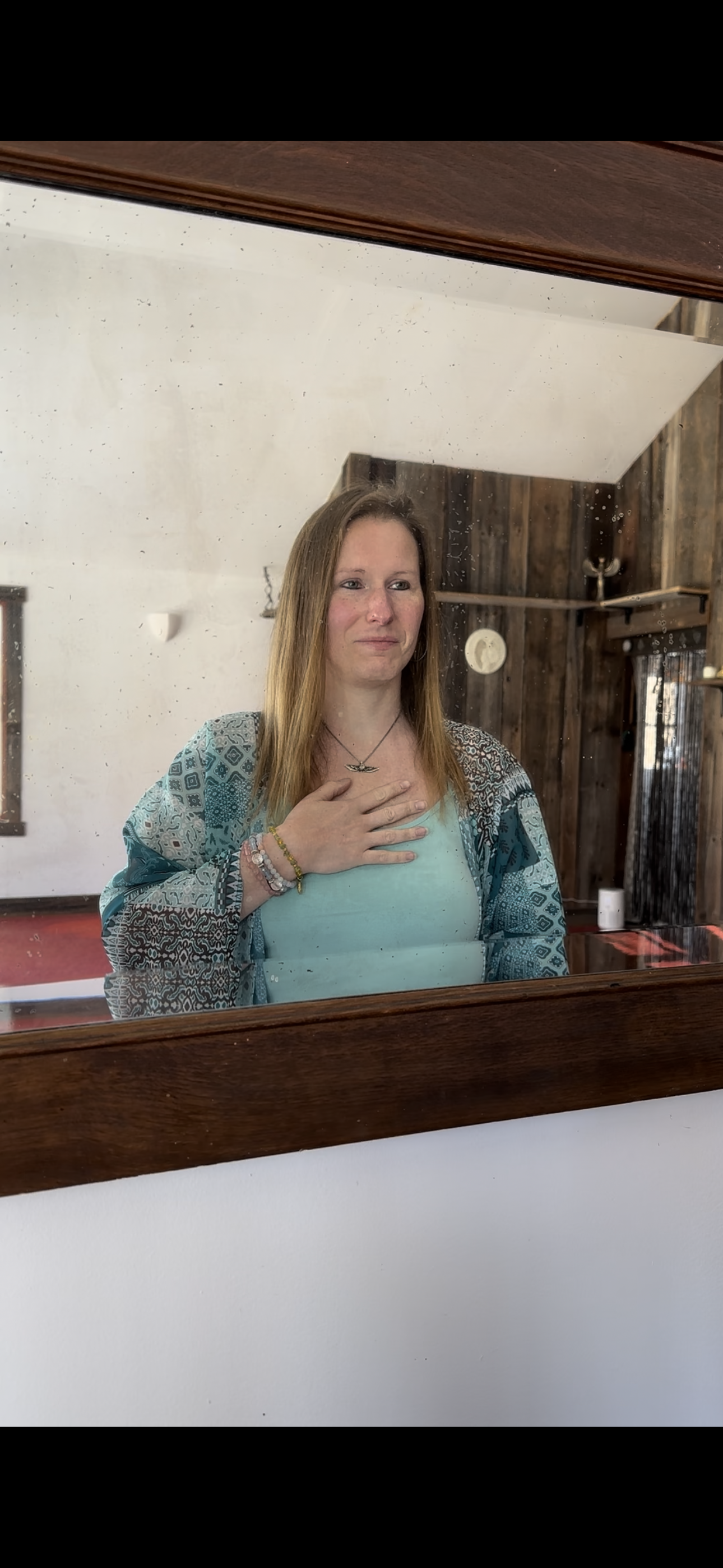

The Fawn Response Nearly Cost Me Myself
For most of my life, I didn't have a name for what I was doing. I just knew that somewhere along the way, I had gotten extremely good at making myself easier to be around. Softer. Smaller. Less. It wasn't until I started doing somatic work that I learned the actual term for it: the fawn response — and once I had the word, I couldn't unsee it anywhere in my own story.
What Is the Fawn Response?
Most people know fight, flight, and freeze. The fawn response is the fourth, quieter survival strategy, and it's the one that gets talked about the least — probably because it doesn't look like a crisis from the outside. The fawn response is what happens when a nervous system learns, usually very young, that safety comes from appeasing. From scanning a room and becoming whatever it needs you to be. From making yourself agreeable, useful, easy, and small enough that you don't become a problem for anyone.
It doesn't look like distress. It looks like the most understanding person in every room. It looks like the friend who never has needs of her own. It looks, from the outside, like being remarkably easy to love — and from the inside, like slowly disappearing.
How the Fawn Response Showed Up in My Life
I was told, more than once, that I was too sensitive. Too much. Too intense. And I learned — the way so many of us learn — to make myself easier to be around. I got very, very good at it. I could read a room before I finished walking into it. I could feel a shift in someone's mood before they'd said a word, and I would already be adjusting myself around it, softening whatever part of me might have caused it.
This is the fawn response operating exactly as it's designed to: keep you safe by keeping you small. And it worked, in the sense that it kept me out of conflict, kept the peace, kept me liked. What it cost me was harder to see for a long time — my own voice. My own wants. The version of myself that existed underneath all that constant, exhausting calibration to everyone else's comfort.
I grew up loving people in rooms I somewhere, cellularly, knew I didn't fully come from. I managed that quiet condition on my belonging for years without ever naming it. The fawn response was the tool I used to manage it — be agreeable enough, easy enough, undemanding enough that the conditional nature of my place never got tested.
Healing the Fawn Response Through the Body
Here's what I want you to know if you recognize any of this in yourself: you cannot think your way out of a fawn response. I tried. Understanding the pattern intellectually — knowing exactly why I did it and where it came from — did almost nothing to change the automatic, pre-verbal speed at which my body still did it. The fawning happens before the thought does. It lives in the nervous system, not in the story about the nervous system.
What actually started to shift it was somatic work — slow, body-led sessions where I learned to notice the fawn response in real time, in my own body, as it was happening. The specific way my shoulders would round forward before I even realized I was bracing. The reflexive softening in my voice the second someone's tone shifted. The tightening in my throat right before I said "it's fine" about something that was not, in fact, fine.
Bit by bit, I practiced staying present in my body in the moments the fawn response used to take over automatically. I practiced letting a beat of silence exist instead of rushing to smooth something over. I practiced saying the true, less convenient thing and staying in my body while the room adjusted to it instead of immediately managing everyone else's reaction to it.
It is not fully finished. I don't know that it ever fully is. But my voice is powerful, and I know now — from experience — that keeping it quiet cost me more than speaking it ever did.
If You See Yourself Here
If the fawn response has been quietly running your life the way it ran mine, you are not broken, and you are not too much. You are a nervous system that learned, a long time ago, exactly what it needed to learn to stay safe. The work now isn't to force yourself into being louder. It's to help your body learn, slowly and safely, that it no longer has to disappear to be allowed to stay.
If this is landing somewhere in you, a Celestara Light Energy Healing session or a free Clarity Call can be a gentle place to start putting language and support around what your body already knows.
You make sense. Every single part of you makes sense.



Comments